An outdoor living space is not a patio with a few chairs pushed against the wall. It is a room without a ceiling, and it works best when you design it with the same care you would give a kitchen or a snug. The deck, lawn, or courtyard outside your back door can hold a dining table, a soft place to sink into, a cooking zone, and enough shelter that a grey afternoon doesn’t send everyone back inside. To learn how to create an outdoor living space, you need to think about three things above all: how the area is divided, what it is made from, and how it feels when the weather turns. Everything else follows from those.
Most homeowners already have the raw ingredients. A flat patch of ground, a wall for privacy, a door that opens outward. What’s usually missing is intention. The space has been treated as a leftover rather than a destination. The fix is rarely a major build. It is a series of decisions about zones, materials, comfort, and connection, made in that order.
Define Zones for Dining, Lounging, and Cooking
An outdoor room fails when it tries to be everything in one spot. A table in the middle of the lawn, a grill beside the sofa, a sun lounger wedged between them. The result feels temporary and slightly chaotic. Real rooms have districts, and so should this one.
Start with the cooking area. If you use a barbecue or a pizza oven, it wants a hard, heat-resistant surface underfoot and a clear route to the dining table. Nobody enjoys carrying a hot tray across gravel. A stretch of paving or composite decking roughly two metres wide gives you safe standing room and a place to set things down. If you cook often, consider a small prep surface at waist height. It changes how the whole space functions.
Dining comes next, and it should sit close to the kitchen door if possible. The shorter the trip with plates, the more often you will eat outside. A table that seats your household plus two is usually the right size. Anything larger becomes a storage problem in winter and a barrier to conversation in summer.
Lounging is the zone people get wrong most often. It should be the softest, most enclosed part of the space, ideally away from the cooking smoke and the foot traffic to the back door. A corner of the garden with a wall or fence behind it feels protected. That psychological shelter matters more than most people realise. We relax when our backs are covered.
If you have room for a fourth zone, make it a quiet one. A single chair under a tree, a bench at the end of a path, a spot to read. It doesn’t need furniture to match the rest. It just needs to exist.
The trick is to let the zones overlap slightly without merging. A shared edge between dining and lounging is fine. A shared surface is not. Use changes in level, different paving, or a planted border to mark the boundary. Even a low planter can do the job.
Choose Durable Materials and Furniture
Outdoor furniture lives a harder life than anything indoors. It faces UV, rain, frost, and the occasional dropped glass of wine. Buying cheap usually means buying twice, and the second purchase is rarely cheaper.
For frames, powder-coated aluminium is the sensible default. It won’t rust, it’s light enough to move when you need to, and it holds up in coastal air. Teak and other dense hardwoods are beautiful and will last decades if you accept that they’ll silver with age. Avoid anything described as ‘wood effect’ unless you can see the actual material underneath. Resin wicker is fine for lounging but tends to sag in the seat over time, so check the frame before you buy.
Cushions are where budgets quietly disappear. Quick-dry foam wrapped in solution-dyed acrylic fabric is the combination that survives repeated soaking and still looks decent after three summers. Standard foam soaks up water like a sponge and turns into a science experiment by August. If you can’t store cushions indoors, pay for the right ones.
Underfoot, the choice is between hard and soft. Paving and decking give you a clean, low-maintenance floor. Gravel is cheap and drains well but is miserable to walk on barefoot and impossible to sweep clean of leaves. If you want a soft surface, look at outdoor rugs made from polypropylene. They’re not luxurious, but they define a lounging zone instantly and can be hosed down.
Tables matter more than people expect. A heavy table stays put in wind and feels solid when you lean on it. A light one skitters across the patio. If you eat outside regularly, choose something with a solid top that won’t wobble. Glass looks smart but shows every fingerprint and needs covering in winter.
One practical rule: buy the best version of the smallest number of pieces you can afford. Two excellent chairs and a sturdy side table will serve you better than a full set of flimsy ones.
Add Comfort with Shade, Heat, and Lighting
Comfort is what separates a space you use occasionally from one you use constantly. Three elements do most of the work: shade, warmth, and light.
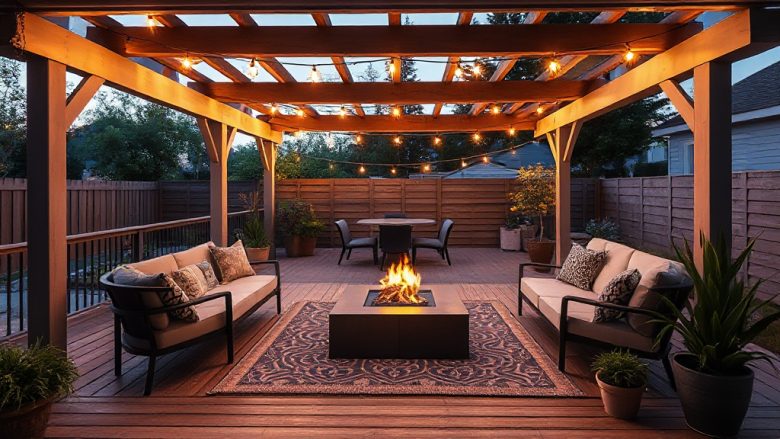
Shade is non-negotiable in a south-facing garden. A parasol is the cheapest option, but it only covers the table. A cantilever umbrella gives you shade where you want it without a pole in the middle of the seating. For something more permanent, a pergola with adjustable louvres lets you control the light through the day. If you’re on a budget, a simple sail shade stretched between two fixing points works surprisingly well and can be taken down in winter.
Heat extends the season by months. A fire pit is the most sociable option, but it needs a safe surface beneath it and somewhere to store the ash. Gas patio heaters are efficient and instant, though they only warm the people directly in front of them. Infrared heaters mounted under a pergola or on a wall are more effective and less obtrusive. Whichever you choose, place it before you buy furniture, not after.
Lighting is where most outdoor spaces fall flat. A single harsh wall light does nothing for atmosphere. Layer it instead. Warm-white string lights along a fence or pergola give a soft base. A couple of low-level path lights stop people tripping. A battery-powered table lamp on the dining table creates a pool of light that makes evening meals feel intentional. Keep everything warm-white, around 2700K, and avoid anything that looks blue or clinical.
Sound matters too, though it’s often overlooked. A small water feature masks traffic noise and adds a gentle background. Even a cheap solar-powered fountain can take the edge off a busy road.
Connect Indoors and Outdoors
The best outdoor rooms don’t feel like a separate destination. They feel like the next room along. That connection is created at the threshold, the point where inside meets outside.
Start with the door. If you have sliding or bi-fold doors, keep the track clean and the opening wide. A door that sticks or only opens halfway kills the flow. If you have a standard back door, consider how it frames the view. A plain door with a step down creates a barrier. A wider opening with a level threshold makes the transition feel natural.
Flooring should relate across the threshold. If your indoor floor is pale stone, use a similar tone outside. If it’s timber, consider decking in a matching hue. You don’t need an exact match. You need continuity, so the eye doesn’t stop at the door.
Repeat materials and colours from inside. A cushion fabric that echoes your sofa, a planter in the same shade as your kitchen cabinets, a rug that picks up the tones of your living room. These small repetitions tell the brain that this is the same home, just further out.
Think about sightlines too. When you sit in your main indoor room, what do you see through the window? If it’s a bin store and a washing line, the outdoor space will always feel like a utility area. Screening, a tall planter, or a simple fence panel can change that view entirely. Design the outdoor room to look good from inside as well as from the garden.
Maintenance and Seasonal Care
An outdoor room needs a routine, not a renovation. A little care each season keeps it usable and stops small problems becoming expensive ones.
In spring, clean hard surfaces with a stiff brush and a mild detergent. Check furniture frames for loose joints and tighten anything that wobbles. Wash cushion covers according to the manufacturer’s instructions and let them dry fully before use. Inspect any lighting for water ingress and replace batteries in solar fixtures.
Through summer, keep on top of the small stuff. Sweep leaves off decking before they stain. Wipe down tables after meals. Empty water from any containers that could become mosquito breeding grounds. If you have a fire pit, clear ash regularly and check the base for heat damage.
Autumn is the season for protection. Store cushions indoors or in a waterproof box. Cover furniture that stays outside, but choose breathable covers rather than plastic, which traps condensation and encourages mould. Drain water features and irrigation lines before the first frost. Bring in any delicate pots or wrap them in bubble wrap and hessian.
Winter is when you decide what stays and what goes. If you have a pergola, check fixings after storms. Clear snow from lightweight structures before it gets heavy. If you use the space in winter, keep a clear path to the door and make sure any heaters are serviced.
One final habit: at the end of each season, walk the space and ask what annoyed you. The chair that’s always in the way. The light that’s too bright. The step that’s hard to see. Fixing those small irritations is what turns a nice outdoor area into a room you actually live in.
Frequently Asked Questions
Do I need planning permission to create an outdoor living space?
In most cases, no. Decks, patios, and pergolas below a certain height usually fall under permitted development rights. However, rules vary depending on whether your home is listed, in a conservation area, or has had previous extensions. If you’re adding a roofed structure or changing levels significantly, it’s worth checking with your local planning authority before you start.
What’s the best way to make an outdoor space usable in winter?
Focus on shelter and heat. A covered area, even a simple pergola with a retractable canopy, blocks wind and rain. An infrared heater warms people rather than air, so it works in open spaces. Add a windbreak, such as a planted screen or a glass panel, and you can comfortably use the space on dry, cold days.
How do I stop outdoor furniture from blowing over?
Weight is the simplest answer. Heavy tables and chairs stay put. For lighter pieces, choose stackable designs you can store when strong winds are forecast. Anchor parasols with a heavy base, and never leave them up in gusty conditions. If you have a fire pit, avoid placing it where wind funnels between buildings.
Can I create an outdoor living space on a small balcony?
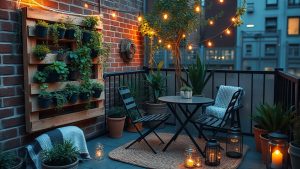
Yes, and the principles still apply. Define a cooking corner with a small grill, a dining spot with a folding table, and a lounging area with a single comfortable chair. Use vertical space for plants and lighting. Choose furniture that folds or stacks, and make sure everything is rated for outdoor use. A balcony can feel like a proper room if you treat it as one.