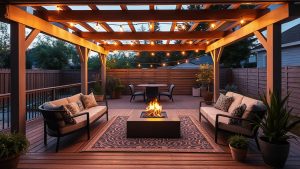
A tiny patio can feel like a tease. You’ve got a slab of concrete, a bit of wall, maybe a railing, and a landlord who won’t let you drill, paint, or plant anything permanent. The good news is that small patio ideas on a budget don’t require a renovation, a contractor, or a deposit-threatening decision. Most of the best transformations come from rearranging what’s already there, adding a few cheap layers, and using vertical space that’s currently doing nothing.
This is a renter-friendly playbook. Everything here is reversible, affordable, and doable in a weekend. You won’t need power tools, and you definitely won’t need permission.
Define Your Patio’s Purpose Before You Buy Anything
The single biggest budget mistake is buying pretty things before deciding how you’ll actually use the space. A patio that’s meant for morning coffee needs different furniture than one built for evening drinks with friends. A reading nook needs shade and a soft seat. A container garden needs sun, drainage, and somewhere to put a watering can.
So sit on your patio for ten minutes and be honest about it. How big is it, really? Measure it. A 2m by 3m space can hold two chairs and a small table, or one bench and a lot of plants, but rarely both comfortably. Note where the sun lands in the morning and late afternoon, because that determines what will survive there. Note where the wind funnels through, because lightweight furniture will end up against the fence.
Then write down one sentence: “This patio is for ___.” Coffee and a book. Drinks with two friends. Growing herbs. Whatever it is, that sentence becomes your filter. If an item doesn’t serve it, it doesn’t come home with you. This one habit saves more money than any sale ever will.
Vertical Gardens and Wall Decor That Renters Can Actually Use
Floor space is the scarcest resource on a small patio, so stop treating the walls as decoration and start treating them as real estate. A vertical garden roughly triples your growing area without taking up a single extra centimetre of ground.
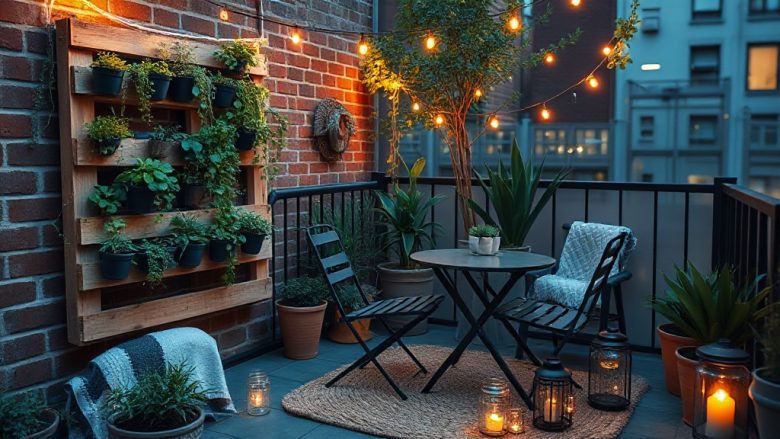
The cheapest version is a wooden pallet stood on its side, sanded lightly and given a coat of exterior paint or wood stain. Staple landscape fabric or old compost bags behind the slats, fill the gaps with potting mix, and plant herbs, lettuce, or trailing flowers. A pallet is often free if you ask at a local building yard or shop, and a small tin of paint costs very little.
If you can’t find a pallet, fabric shoe organisers are a quiet hero. Hang one on a hook that clips over the top of a fence or railing, fill the pockets with small pots, and you have a herb wall for the price of the organiser. Pocket-style vertical planters work the same way and often cost less than a single large ceramic pot.
For pure decor, think lightweight and weather-resistant. A woven mat, a cheap outdoor mirror, a row of small framed prints sealed with clear varnish, or a length of outdoor fabric strung along a railing all add personality without weight. Command-style hooks and over-the-door hangers mean no screws and no damage. Just check the weight rating before you hang anything with soil in it, because wet compost is heavier than it looks.
Budget-Friendly Seating and Tables That Fit Tight Spaces
Bulky furniture is what makes small patios feel smaller. The fix is to choose pieces that fold, stack, or do two jobs at once.
A bistro set with two folding chairs and a small round table is the classic answer, and secondhand ones turn up constantly. Look for metal frames rather than plastic, because they survive weather better and can be revived with a spray can. A folding bench is another strong option: it seats two, tucks flat against the wall when not in use, and often includes storage under the seat.
If you want something more lounge-like, a single outdoor loveseat or a pair of stacking armchairs plus a small side table beats a full sofa every time. Add a waterproof cushion and a throw, and it reads as comfortable rather than cramped.
For tables, think sideways. A wall-mounted drop-leaf table folds down when you’re not eating and gives you a proper dining surface when you are. A sturdy wooden crate turned on its side becomes a side table and hides a watering can or a pair of secateurs inside. Even a large plant saucer on top of a terracotta pot makes a serviceable drinks table.
Whatever you choose, keep the colour palette to two or three tones. A single colour scheme makes mismatched secondhand pieces look deliberate instead of random, and a can of matching spray paint is one of the cheapest ways to unify a patio.
Lighting and Ambiance for Under $50
Lighting is where a cheap patio starts to feel intentional. It’s also the easiest place to overspend, so set a limit and stick to it.
Solar string lights are the obvious starting point. They need no wiring, no outdoor socket, and no landlord approval. Drape them along a railing, across a fence, or through a trellis, and let them charge during the day. A set of warm-white bulbs costs very little and transforms the space after dark.
Lanterns come next. A cluster of three cheap lanterns in different heights, each holding a solar or battery candle, gives you a soft, flickering glow without any cables. Glass jar lanterns made from old jam jars, a bit of wire, and a tea light work just as well and cost almost nothing.
For practical light, a single battery-powered clip-on lamp attached to a railing or chair back is enough to read by. Battery versions avoid the problem of no outdoor socket entirely, and rechargeable batteries keep the running cost down.
Don’t forget scent and sound, which do more for atmosphere than most people expect. A pot of lavender or jasmine near the seating area releases fragrance in the evening. A small solar fountain or even a bowl of water with floating flowers adds gentle movement and masks traffic noise. Total spend for a full lighting and ambiance refresh can easily stay under $50 if you buy solar first and skip anything that needs an extension lead.
DIY and Repurposing Ideas That Cost Almost Nothing
Repurposing is where a small patio gets its character. The trick is to look at what you already own and ask what else it could be.
An old wooden ladder leaned against a wall becomes a plant stand, with pots resting on each rung. A stepladder does the same job and folds away. A chipped teapot, a tin can with the label removed, or a colander makes a quirky planter as long as you add drainage holes. Old wellington boots, a wheelbarrow, and a drawer from a discarded chest all work too, though the drawer will need a liner to stop the wood rotting.
Wooden pallets reappear here as low tables, corner benches, and vertical planters. A single pallet cut in half and stacked makes a compact bench with storage underneath. Sand the edges, seal with an exterior oil, and it will last several seasons.
Fabric scraps, old curtains, and cheap cotton sheets can become cushion covers, a shade sail, or a privacy screen strung on a line. A coat of exterior paint on a tired metal chair costs less than replacing it and gives you a colour you actually chose. Even a plain concrete slab can be softened with an outdoor rug, and a cheap woven mat does more for the look than almost anything else per pound spent.
The rule with repurposing is simple: if it holds soil, holds a drink, or holds a candle, it can probably live on your patio.
Seasonal Swaps That Cost Nothing to Change
A small patio can feel new four times a year without you buying anything new. The secret is to keep a core of neutral, durable pieces and swap only the soft, cheap layers.
In spring, bring in pots of bulbs and fresh herbs, and change cushion covers to lighter colours. In summer, add shade with a cheap parasol or a fabric sail, and move the seating into the coolest corner. In autumn, switch to warm-toned throws, add lanterns earlier in the evening, and plant heathers or ornamental cabbages for colour that survives the cold. In winter, protect pots by grouping them together, wrap delicate plants in fleece, and lean into the season with fairy lights and a thermos rather than trying to fight it.
Store the off-season items in a lidded plastic box that doubles as a side table, so your small space never has to absorb clutter. Rotate one or two decorative items rather than accumulating them, and the patio will feel refreshed rather than crowded.
None of this requires a big spend. A tiny patio with a clear purpose, a vertical garden, folding furniture, solar lights, and a few repurposed containers can look and feel far better than a larger space that was never thought through. Start with the sentence about what the patio is for, buy one thing at a time, and let the space evolve. That’s how a small budget turns into a patio you actually want to sit in.