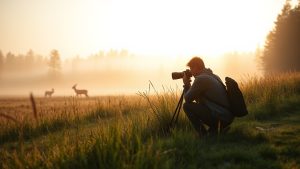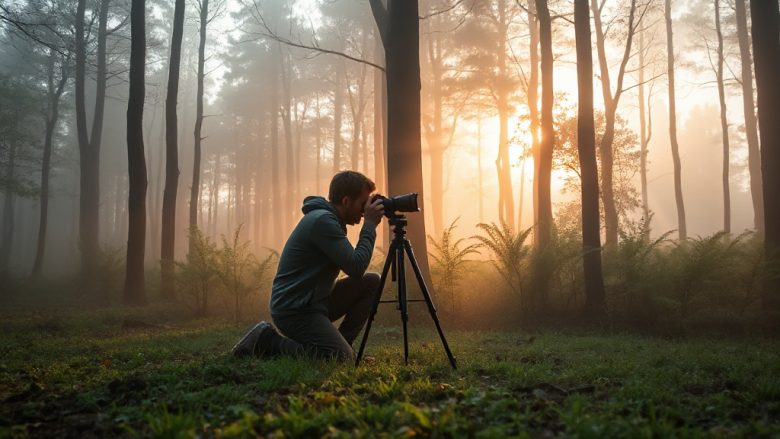
You have walked an hour to reach a ridge, the light is doing something extraordinary, and you raise the camera only to feel a quiet panic. Where do you point it? Which part of this vast, moving scene deserves the frame? Most beginners freeze at this exact moment, and the usual flood of expert advice on nature photography, all those lens charts and histogram lectures, makes the freeze worse rather than better.
The truth is that experienced nature photographers are not doing anything mysterious. They have simply built a small set of habits that they repeat every time they step outside, and those habits do more for their images than any upgrade ever will. This is a distilled version of those habits, written for someone holding a camera and standing in a beautiful place, wondering what to do next.
Start with light, not gear
Newcomers obsess over bodies and lenses because gear is the one variable they can buy. Light is the variable that actually decides whether an image works, and it is free. The single most useful habit you can adopt is to notice light before you notice subjects.
Walk into a wood at midday and everything looks flat and slightly grey, because the sun is directly overhead and shadows are short. Return at first light and the same wood is transformed: low sun rakes across trunks, mist hangs in the hollows, and every texture has depth. Same place, same camera, completely different photograph. That difference is not a secret technique. It is timing.
Practically, this means planning your outings around the edges of the day. The hour after sunrise and the hour before sunset are the classic windows for a reason, but they are not the only ones. An overcast morning gives you soft, even light that is wonderful for ferns, fungi and woodland detail, because there are no harsh highlights to blow out. A break in the clouds after rain can produce brief, dramatic light that lasts ninety seconds and rewards anyone already standing in position.
Learn to read the quality of light in three simple terms: direction, softness and colour. Direction tells you which side of your subject will glow and which will fall into shadow. Softness tells you how much detail you will keep in both. Colour tells you the mood you are recording, warm and golden or cool and blue. When you can name those three things, you know what kind of photograph the scene in front of you is capable of giving.
Compose with intention
Most weak nature photographs are not badly exposed. They are simply undecided. The photographer pointed at something interesting and let the frame fill up with whatever happened to be there. Composition is the act of deciding what the picture is about.
Before you press the shutter, ask yourself one question: what is the subject? If you cannot answer in a single word or short phrase, the image will not communicate anything. A single backlit leaf, a line of footprints in mud, a heron against still water. Once you know the subject, everything else in the frame either supports it or competes with it, and you can start removing the competition.
Useful habits here are simple and physical. Move your feet rather than zooming, because walking two steps left changes the relationship between foreground and background in ways a lens cannot. Get low for small subjects; eye level with a mushroom or a frog is almost always stronger than looking down at it. Leave space in front of anything that appears to be moving, so a bird or an animal has somewhere to travel within the frame.
Then look at the edges. Beginners scan the centre of the frame and miss the bright twig poking in from the left, the distracting stone at the bottom, the awkward gap at the top. Train your eyes to travel around the border before every shot. It takes three seconds and fixes more images than most editing software ever will.
Foreground matters more than people expect. A wide landscape with nothing in the near field often feels empty, like a postcard rather than a photograph. A few rocks, a curve of grass, a fallen branch, even a patch of frost can anchor the viewer and give the scene a sense of depth and scale.
The patience principle
Here is the habit that separates good nature photographers from everyone else, and it has nothing to do with equipment. They wait.
They arrive early, they settle in, and they let the place come to them. Wildlife in particular operates on its own schedule. A bird that flies off when you approach will often return within ten or fifteen minutes if you stay still and quiet. An animal that has seen you pause will gradually relax and resume behaving naturally, and natural behaviour is what makes a wildlife image feel alive rather than merely sharp.
Patience also applies to light. Clouds move. Shadows shift. A scene that looks dull when you arrive may open into something remarkable twenty minutes later. The photographers who come home with the best frames are usually the ones who stayed longer than felt comfortable, watching and waiting while everyone else packed up.
There is a practical discipline hidden inside this. Slow down your shooting. Instead of firing off dozens of frames in the hope that one works, take a few deliberate images and then stop, look, and think about what to change. Ten considered photographs will teach you more than three hundred careless ones, and your editing time will shrink dramatically.
Patience also means returning. The same location in different seasons, weather and light will keep giving you new material for years. A tree you have photographed a dozen times still has something to show you in fog, in snow, in the first green of spring. Familiarity is not boredom; it is an advantage.
A simple field checklist
When you are standing in front of something wonderful and your mind goes blank, a short routine will carry you through. Run through these points in order and you will rarely come home empty-handed.
- Check the light first: which direction is it coming from, how soft is it, and is it about to change?
- Name your subject in one word, then remove anything that competes with it.
- Move your feet, change your height, and check all four edges of the frame before shooting.
- Watch for the moment, not just the subject: a turn of the head, a ripple, a gust of wind through grass.
- Take a few frames, then stop and review one image on the back of the camera to check focus and exposure.
That is the whole routine. It takes less than a minute once it becomes habit, and it replaces a great deal of anxious fiddling.
Common mistakes to avoid
The most frequent error is chasing rarity instead of quality. A common species in beautiful light will always beat a rare one photographed badly in harsh midday sun. Beginners often dismiss the robin in their garden and drive two hours for something exotic, then wonder why the garden shots were better.
Another is over-reliance on the longest lens you own. Reach is useful, but distance flattens perspective and strips away context. Some of the most powerful wildlife images are made with modest focal lengths because the photographer got close through fieldcraft rather than magnification, and the surroundings tell part of the story.
Then there is the temptation to keep shooting when the light has gone. Once the sun is high and hard, put the camera away, eat something, scout a location for later. Rest is part of the craft. Tired photographers make careless mistakes and miss the moment when the light finally returns.
Finally, resist the urge to clean up every image into something it was not. Heavy processing that turns a soft dawn into a lurid orange sky rarely improves a photograph. Gentle adjustments that preserve what you actually saw will age far better, and they keep you honest about the scene in front of you.
When to break the rules
Every habit above is a starting point, not a law. Once you understand why the conventional approach works, you earn the right to abandon it deliberately.
Shoot into the sun when you want flare, silhouette and atmosphere, and expose for the highlights so the subject becomes a shape rather than a detailed object. Photograph at midday when the subject is a shadow itself, such as the geometric pattern of a fence on dry grass, because harsh light can be graphic and striking. Centre your subject when symmetry is the point, like a reflection in still water or a perfectly balanced fern frond.
Break the patience rule too, occasionally. Some moments last a fraction of a second, and reacting fast matters more than composing carefully. A kingfisher diving, a wave breaking, a startled deer. In those cases, take the shot, accept the imperfections, and be glad you were ready.
The point of learning the rules is not obedience. It is having a reliable baseline you can depart from with intention, knowing exactly what you are giving up and what you are gaining.
None of this requires better equipment. It requires attention, repetition and a willingness to be outside in uncomfortable conditions for longer than is strictly reasonable. Your first attempts will not match the images that inspired you, and that is fine. Every experienced nature photographer has a folder full of disappointing frames that taught them something. Go out often, stay a little longer than you planned, and let the place show you what it wants to give. Practice, repeated patiently across many mornings, will always beat the pursuit of a perfect single shot.